
Summary
In the second half of a two-part message on the parable of the sower, Dr. Josh Olds moves from shallow faith to struggling faith, looking at the thorns that choke a growing believer: the worries, wants, and wealth of this life. He shows how even legitimate cares like family can crowd out Jesus, how the pursuit of pleasure and possessions fills our lives, and how little of the global church’s money goes to spreading the gospel. The sermon closes with the good soil, where lasting fruitfulness is about more than evangelism and is found in the fruit of the Spirit, which works the ground in the hearts of others.
Outline
- From Shallow Faith to Struggling FaithAfter the path and the rocky soil, the thorny soil receives God’s Word but is crowded by weeds that steal its nutrients and sunlight, so a believer who is bearing fruit never reaches full spiritual maturity.
- The Thorn of WorriesJesus is concerned with the legitimate cares of life, like family, that can quietly replace our relationship with him, yet he does not call us to neglect them but to let him be the life-giving force behind them.
- The Thorn of WantsAt the opposite extreme from legitimate cares are the unbridled pleasures and desires of this life, and a culture rich in stuff, entertainment, and distractions leaves little room to be rich in Jesus.
- The Thorn of WealthWe are called to give one hundred percent of our lives, wealth, and possessions to God, and the sermon points to how small a share of global Christian wealth goes toward the gospel, reminding us that treasure on earth is not our salvation.
- Good Soil Bears the Fruit of the SpiritFruitfulness is more than getting people saved; it is love, joy, peace, and the other fruits of the Spirit, which prepare the hearts of others and endure through suffering, calling us to be both receptive soil and active sowers.
Topics
Read the full sermon text
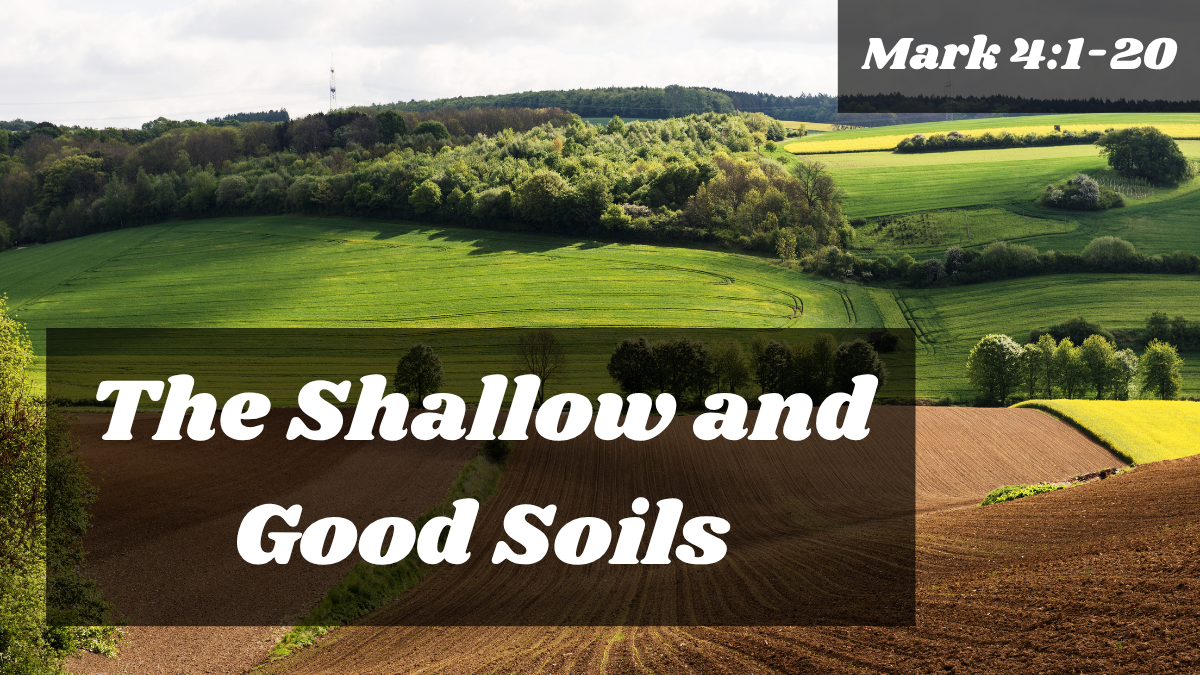
Last week, we talked about two different types of soil: the compacted soil and the rocky soil. And these two types of soil were representative of folks who cannot receive the Gospel message at all and those who receive the Gospel message but so shallowly that it does not last. I want you to note the progression here. From not at all to just a little bit and today continues that progression to a type of soil that receives the Word of God but there’s other things in the soil. The progression goes from shallow faith to struggling faith.
Jesus talks about how some seeds fall into places that are also populated by thorns or weeds and faith becomes a struggle because these thorns and weeds surround that plant, steal its nutrients from the ground, block its access to the sun, siphon off its resources, and keep it from being fruitful and multiplying. Let’s hear the explanation straight from the lips of Jesus:
Still others, like seed sown among thorns, hear the word; 19 but the worries of this life, the deceitfulness of wealth and the desires for other things come in and choke the word, making it unfruitful.
This soil refers to a Christian, a follower of Jesus whose life is bearing fruit, but something stands in the way of their full spiritual maturity. And it is our job as Christians and as a community of Christians to continue to work the soil and now that includes the work of getting rid of the thorns that choke us and others. The things that choke us are the worries of this life, the deceitfulness of wealth, and the desires for other things. Our worries, our wants, and our wealth.
The first thorn is the thorn of worries. Jesus is pretty vague here, he doesn’t give us specifics, just the blanket statement “the worries of this life.” That word, worries, is the Greek word, merimnah, and carries with the connotation of anxiety or cares. There’s this verse in First Peter that you probably recognize as “Cast your cares upon him, for he cares for you.” That’s the same word as Jesus uses in his parable.
Worry is often thought of as frivolous. Oh, don’t worry about that is much different than Oh, don’t care about that. What Jesus had in mind here wasn’t the frivolities of life, which, let’s be honest, is much easier to give up worrying about. Jesus is actually saying “sometimes the legitimate cares of this world get in the way.” When I think of what I care for the most, what I worry about the most, it’s my family. That’s a legitimate care. But Jesus says, be careful that your family does not become an idol that supplants or replaces your relationship with me.
A few years ago, the Barna Group published the results of study they did called “Christian Women Today.” They asked Christian women the question “What is your highest priority? 53% said family. Faith came in second place at 16%. They rephrased the question “What is your most important role in life?” 62% said mother, 13% said follower of Jesus. Mothers, you do all these things for your family, they have to be done, it sounds so self-sacrificial, but is it at the expense of your faith. Is family a flower in your garden that beautifies the landscape? Or is it a weed that—no matter how well-intentioned—is choking your faith.
This is hard. And we want to be careful not to go the other direction too far. The Christian mystic Aiden W Tozer was known for the intensity of his relationship with God and he once wrote that “the man who has God for His treasure has all things in One.” Unfortunately, that pursuit of God led him to neglect others. After his death, his wife remarried and when asked about her second husband, she commented “I have never been happier in my life. Aiden loved Jesus Christ, but Leonard Odam loves me.”
What Jesus is advocating here is not the neglect of family. Jesus is not saying that he has to be the only plant in the garden, but rather that he is the life-giving force behind all those things. Jesus says in the Sermon on the Mount “Seek first the kingdom of God and his righteousness and all of these things will be added to you.” We have legitimate concerns and cares and responsibilities and Jesus reminds us to use our faith to transform those things rather than cast faith by the wayside.
Second, Jesus says, there are thorns of wants. Jesus is also very vague here as well. The worries of this life…that’s a rather vague statement. The second statement is even more vague, with Mark simply calling it “the desires for other things.” Mark uses the word epithumia, which means longing or lust. Luke, in his retelling, uses hedone, from which we get the word hedonism
The point Jesus is trying to get across as thorn number two is a contrast from thorn number one. Thorn number one is the legitimate concerns and cares of this life. Thorn number two calls out the illegitimate and unbridled pleasures and desires of this life. These two thorns are two different extremes, indicating that everything between that vast array is a potential thorn choking one’s spiritual life.
The pursuit of pleasure is a siren song of self-indulgence that remains an epidemic among American Christians. Last week, we talked about a Barna poll called The State of Discipleship. When asked why they did not pursue spiritual maturity, 23% simply said that life was too busy. 8% were audacious enough to say they had other priorities that would come first. So there it is. I’m too busy means I put other things first. About a third of people indicated in this poll that “I wanna do other things” was the reason they did not pursue spiritual maturity.
The thorn of things will choke our relationship with Jesus. That’s why Jesus said “Indeed, it is easier for a camel to go through the eye of a needle than for someone who is rich to enter the kingdom of God.” We have so much stuff. We have so much entertainment. We have so many distractions. We are rich in the experiences of this world. Jesus calls us to be rich in him.
The third thorn is the thorn of wealth. And this is tied directly to wants. We are called to give 100% of our lives to God, and that includes 100% of our wealth and 100% of our stuff. What we own is not ours, it is meant to be used for the glory of God.
Combined, Christians make about $42 trillion. Obviously, that’s an estimate, because we can’t poll everyone. This information is from the International Bulletin of Missionary Research. $700 billion of that is given to any Christian causes. Globally, that’s 1.67%. Of that $700 billion, only $450 million goes to the evangelism of unreached people groups. That’s an amount equal to what was spent on Halloween decorations last year…for pets.
Jesus is very clearly saying this: wealth seems like it is your salvation. It isn’t. The world—even Christians—get caught up in the pursuit of physical wealth and miss out on the spiritual treasures God has laid before them. Jesus says in the Sermon on the Mount:
“Do not store up for yourselves treasures on earth, where moths and vermin destroy, and where thieves break in and steal. 20 But store up for yourselves treasures in heaven, where moths and vermin do not destroy, and where thieves do not break in and steal. 21 For where your treasure is, there your heart will be also.
And now we get to the end of it all. The good soil:
Others, like seed sown on good soil, hear the word, accept it, and produce a crop—some thirty, some sixty, some a hundred times what was sown.”
And here is our goal, to be that good soil. Now you might be thinking that the goal here is evangelism, that the true Christian is one bringing others to Jesus. While that’s not incorrect, it’s not the full picture. Christian fruitfulness is about more than reproduction, it’s about modeling our lives after Jesus, who is our true root.
When Paul talks about fruitfulness, he says that the fruits of the Spirit are…getting other people saved?…no. The fruit of the Spirit is “
But the fruit of the Spirit is love, joy, peace, forbearance, kindness, goodness, faithfulness, 23 gentleness and self-control. Against such things there is no law.
And it’s these attitudes and actions that will ultimately lead others to Christ. Bearing this kind of fruit helps work the ground in the hearts of other people. When you treat your enemies with any of these fruits, when you showcase these fruits in your life amidst struggles and temptations, when you exemplify the Spirit-filled life in a world desperate for an answer of how to find meaning, purpose, and destiny…you will find others growing in their faith because of you.
Good soil produces a faith that reproduces and a faith that lasts. It weathers the test of time. It stands firm in the midst of the storm. It stays rooted through the dark night of the soul. And it comes out stronger and more productive in the end. Pain does not come from God. Suffering does not come from God. Yet, in the pursuit of God’s calling in your life, there will be pain, there will be suffering. It is the natural consequence of the spiritual war in which you enlisted on the front lines. It is difficult, it is so difficult, and yet it is ultimately worth it, because perseverance leads to character, and character, hope.
Jesus calls us to be that good soil. And he calls us to be those who are planting, those who are tilling, those who are working the ground. As we go out this morning, our call is to be both receptive to the message of the Gospel—even if that means changing of our beliefs—and be in the business of sharing the seeds that lead to the Gospel’s fruit. Do we see the fruits of love, joy, peace, forbearance, kindness, goodness, faithfulness, gentleness and self-control? Are we emulating those fruits in our lives? In our politics? In our businesses? In our parenting? In our relationships? Let us be people who are receptive to the Word, good, tilled soil that can grow for the kingdom.