
Summary
On the second Sunday after Epiphany, Dr. Josh Olds explores the visit of the Magi in Matthew 2 and asks why God would invite Persian astrologers into a story that was so thoroughly Jewish. After tracing two thousand years of Israel’s history and a thousand years of longing for a Messiah, he shows that the Magi were not necessarily three, not kings, and not from the Orient, but outsiders whom God reached by working within what they already knew. The message closes with a question for the church: who are the outsiders God is calling into his story today?
Outline
- Epiphany Lets the Magi Story Stand on Its OwnBy separating the visit of the Magi from the rest of the nativity, the church calendar helps us notice details of this story that we would otherwise miss when it is bunched together with everything else.
- Israel Had Waited a Thousand Years for a MessiahFrom Abraham to David, exile, the Maccabees, and Rome, Israel’s history shaped a people who expected a Messiah to restore their kingdom, their independence, and their power, making the Christmas story a uniquely Jewish one.
- The Magi Were Surprising OutsidersDespite popular tradition, the Bible never says there were three Magi, that they were kings, or that they came from the Orient; they were Persian priests who studied the stars and traveled far to worship a king who was not theirs.
- God Is Calling Outsiders Into His StoryGod broke into the Magi’s story first, using their own beliefs to lead them to new ones, and the sermon closes by asking who today’s outsiders are, people who may not look, talk, or believe like us.
Topics
Read the full sermon text
This Sunday is the second Sunday after Epiphany. I don’t know if anyone here follows the church calendar. My church denomination growing up didn’t. I became more familiar with it when I got older. The Church of England follows the church calendar, so you may be more familiar with it than me. Can anyone tell me what today is on the church calendar?
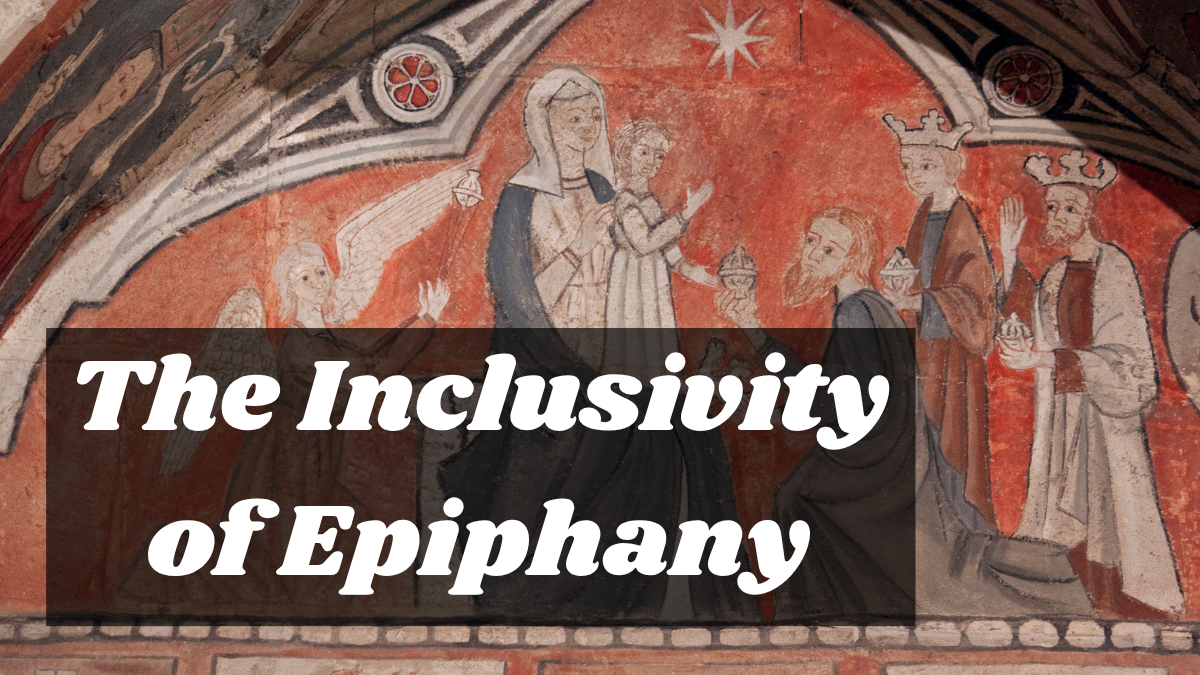
When Bob and Dee asked me to speak, they asked me “Can you talk about Epiphany?” Epiphany is the celebration of visit of the Magi to Jesus and his family. Now I like that Epiphany separates the Magi story from the rest of the nativity. There’s so much going on in this story that when we bunch it all up together, we’re going to miss stuff.
So before we talk about Epiphany, let’s talk about the Christmas story. At the time that Jesus was born, the people of Israel were desperate for a Messiah, for a Savior. The nation of Israel had been founded nearly two thousand years before the birth of Jesus when God called a man named Abraham to follow him and promised that his descendants would become a mighty nation. It took one thousand years before that promise saw some fulfillment with the reign of King David. But the nation didn’t last very long. Just two generations. David and his son Solomon. After that the kingdom split into two. By 721 BC, the northern kingdom had been overrun. By 586 BC, the southern kingdom had been overrun.
After 70 years in captivity in the nation of Babylon, the people of Israel were allowed to return to their homeland and rebuild. But they never had independence. They will subject to Babylon, then Media, then Persia, and then the Seleucid Empire. In 167 BC, a group of Jewish freedom fighters called the Maccabees temporarily overthrew the Seleucid and established, for the first time in hundreds and hundreds of years, an independent Kingdom of Israel. That lasted only a couple of generations until the next big bad Empire came along: Rome. Rome crushed everything and everyone and Israel was, once again, an oppressed and persecuted nation.
Now why am I telling you all of this when we’re supposed to be talking about Epiphany? Well, you need to understand the mindset of the people at this time. They had thought they had a messiah in the Maccabees. They had a taste of independence and freedom. And now they desperately wanted the prophecies about Messiah to come true.
The birth of Jesus the Messiah is the fulfillment of a thousand years of Jewish hopes and dreams. In Luke chapter 3, we are told “The people were waiting expectantly and were all wondering in their hearts if John might possibly be the Messiah.” They were waiting expectantly. They really thought that Messiah would come in their lifetime.
For a thousand years, they had been waiting, and now like the song “O Little Town of Bethlehem” says “the hopes and fears of all the years are met in thee tonight.” The coming of Messiah is at the heart of Israel’s story. They think it means the restoration of their kingdom. The restoration of prosperity. The restoration of independence. The restoration of power. The central theme of two thousand years of Israelite history is that a Messiah is coming. The story of Messiah is a Jewish story for the Jewish people.
Now we get to Epiphany. Matthew chapter 2, verse 1: “After Jesus was born in Bethlehem in Judea, during the time of King Herod, Magi from the east came to Jerusalem.” We know very little about these Magi, even though church tradition tries to tell us a lot about them. The most popular hymn about them is the hymn “We Three Kings” which begins: “We three kings of Orient are…”
Well, nowhere in the Bible does it say there were three of them. Nowhere does it say they were kings. And nowhere does it say they were from the Orient. The bible does call them Magi, which is a Persian term for priests in their religion. As part of their religion, they studied the stars and the movements of the stars and tried to divine some meaning out of it all. And one day they saw something. They saw something that made them gather up all sorts of wealth and go on a long journey to swear allegiance to a king who was not theirs, who was part of a religion they did not follow. All because they saw a star.
“Where is the one who has been born king of the Jews? We saw his star when it rose and have come to worship him.”
Into this uniquely Jewish story of Messiah come trundling some pagan Persian astrologers, descendants of a people who had held the Jewish people in captivity. And they break into this story because God first broke into theirs. He tears open the heavens to give them a sign. He works within the system of what they already know and believe to lead them to new knowledge and new beliefs. God isn’t just calling “his people.” Not just the respectable. Not just the ones who have been part of the system or who grew up in it.
God is actively calling all people into his story. The question I want to leave with you today is simply this: Who are the outsiders that God is calling into God’s story today? Could be people who don’t look like you, talk like you, have the same cultural or religious backgrounds as you. Who are the outsiders that God is calling into the story?
Let me close with prayer.
We thank you Lord, for the gift of revealing yourself to all people, and ask that you continue to be revealed in new and unexpected ways. Give us eyes to see your revelation, a mind to understand it, and a heart to share it with others. In the name of Jesus, Amen.